A Soft Goodbye

This week has been a very hard week for my family. My father-in-law lost his battle with cancer and was laid to rest.

I realized today that, since he was diagnosed in August, we’ve been living our lives in a daze, knowing that the end was coming soon. We spent as much time as we could with him. Up to the end, he still kept his sense of humor and his mind sharp.

Bill was a man who lived with a purpose. He was shy and took a while to open up to me. When he finally did, though, I was blown away. He had a wicked sense of humor–  he made me blush on many an occasion. I can see where my husband learned humor and I am thankful for it.

Bill was an unapologetic conservative, but it suited him. I remember the chuckle that I got when I looked at some of the books he would read. I remember one being about how to talk to liberals (if you are forced to) or something like that. Needless to say, we didn’t talk politics that much.

There wasn’t a time when I visited that we didn’t watch sports. He watched everything from college sports to professional sports. It was fun to watch him give up the television so his grandchildren could watch their shows. He acted as if he was doing it begrudgingly, but you could see his joy in watching them.

My daughter loves him so much. She is taking this like a five-year old would, but I can definitely tell that the loss is hard for her. It hurts my heart, but I knwo that she will be fine.

One of the things that really struck me was the way he made sure that my mother-in-law was taken care of. He always took such good care of Peggy. This didn’t end with his passing. Because he knew that his time here was almost up, he arranged so many things to help her. Instead of succumbing to despair because of his illness, he faced it head on and with dignity. I hope I can be that strong.

Bill truly loved my mother-in-law. It was apparent in the way that he looked at her and spoke to her. Thirty-seven years didn’t diminish their relationship. I know it wasn’t all sunny, but they took the adversity and made it into a stronger relationship.

Jason learned how to be a husband by watching his father. He takes such good care of me, always making sure that I have everything I need. He supports me in everything. I know that Jason learned this from watching his father interact with his mother. I am so thankful to Bill for being a good model for my husband.

I know that this post is a bit rambling, but I really needed to say these things.

NaNoWriMo, Part Deux

As a matter of fact,
I *AM* crazy

So, this year I am going to participate in NaNoWriMo again. Crazy, right? Especially since I am taking classes and teaching and all of the other stuff that is going on in my life right now. I figure that I might as well push myself over the edge of sanity and embrace my inner basket case. It’s going to be swell.

I am going to alleviate some of my stress, however, by continuing the novel that I didn’t get to finish last year because of Natter’s broken leg. I love my novel and think that it deserves to be finished.

Even now, I am trying to figure out how to get these 150ish words into the novel I’m writing. It’s awesome. Wish me luck!

Uniformity

As a teacher, I have always been supportive of school uniforms. The thought of not having to worry about what my students are wearing seems to be a little bit of heaven to me. It has nothing to do with wanting kids to look the same. It has everything to do with not having to tell a fourteen year old to wear a shirt that doesn’t show EVERYTHING.

Now I am a parent of a kindergartner who goes to a school that requires uniforms. When I found out about the policy, I was thrilled. We wouldn’t have to worry about what to wear every day. As far as I was concerned, it was the ideal situation all around.

Flash forward a quarter into the school year.

My delight at school uniforms has quickly waned. I miss picking what to wear every morning with my daughter. I miss being able to listen to her opinion on what is fashionable. In fact, I am starting to feel resentful about this loss of experience with her. As a parent, I should be able to choose what my child wears.

The principal of her school said at the beginning of the school year that she is planning on having a poll to see what the community wants to do with the policy. If someone would have told me that I would vote no on uniforms, I would have told them they were crazy. Isn’t it amazing what a change in perspective does to a person?

BORDERS Closing

As I am sitting here in front of BORDERS, waiting to meet my family, I am struck with a sudden sense of longing. This store has been a part of my life for many years. I’ve bought books I loved and some I hated. I’ve had countless cups of tea while writing in the coffee shop. It has been a refuge for me when I needed to get away from everything.

Now I sit in the empty parking lot. It is humbling to know that things can disappear so completely. In retrospect, I’ve seen it dwindle. First the music left. Next, the video section. It was so gradual, though, I didn’t realize the ramifications of the slow disintegration. A part of me thought it would be there forever.

I was a part of their demise. Buying online is less expensive and more convenient. However, BORDERS did not help themselves by becoming more innovative about the way they interacted with their customers. Their online presence was spotty and difficult to navigate. They didn’t change with the times.

As educators, we are all at risk for “going out of business.” If we don’t stay innovative in our approach, our students will stop paying attention. Meeting the needs of our customers while maintaining high quality product is essential. If we can’t keep up, we’ll fade, just like BORDERS did.

So, farewell, my favorite bookstore. I miss sitting in you and being surrounded by books. I hope I can learn a lesson from your closing.

My Last Weekend of Summer Vacation

This is the last weekend I have as a mom and a wife only. Come Tuesday, my classroom will be filled with the chatter of brand new freshmen and a few repeat students. It is a bittersweet weekend. I love spending time with my family, but I cannot wait to embrace this new group of kiddos and become a part of their support structure.

The great thing is that I have had quite a few of these students before as seventh graders. When I check my rosters, there are little pictures of them. There are so many of their little faces that I recognize and it fills my heart with happiness. I can’t wait to reacquaint myselves with them and to get to know the others whose faces are unfamiliar.

My summer has been filled with so much professional development. ISTE, Anita Archer, Teach like a Champion, posts from my PLN on Twitter and Google+. Honestly, I sometimes feel overwhelmed by all of the new ways that I have to reach my students. I decided that this is the perfect time to reflect on what I’ve learned and set goals for myself.

I am going to keep my goals SMART this year. If I do so, I will be able to develop a good plan to achieve them. So, here goes:

  1. I will keep my word wall up to date by posting my words in the morning on the day I teach them.
  2. I will give my students more choices about how to learn their objectives. There is more than one way to get to mastery.
  3. I will create authentic audiences for my students, even if it takes more time to find them.
  4. I will faithfully preassess before every unit. I do this for many of my big units, but I sometimes just wing it on others. 

These are my goals for this year.  I will revisit these and see how I’m doing.

What about you? Do you have any goals that you want to focus on for this upcoming school year?

Being off the Grid

I recently had an opportunity to go completely off the grid for a week. Well, it wasn’t an opportunity, really, more like a forced exclusion. I visited my father in the middle of Missouri– three hours from St. Louis and three hours from Kansas City. It was out of network for my smart phone and not even on the map for Internet access.

That’s right. I went a whole week without Facebook, Twitter, email (all 7 of them), and all things cloud-based. Crazy, I know!

At first, I was in a panic. How would I keep connected with the world? How would I blog about what I was doing? How would I get my online class started? I was like an addict, freaking out about my next “fix”. However, being the trooper that I am, I soldiered on.

I left my smart phone in my room (gasp).

The first day was very hard. I kept on clutching my pocket, seeking the rectangular security that I usually found there. Feeling the absence of its assuring weight was alien to me. I felt a little lost, especially when I wanted to share with my friends what we were doing. It felt strange to not tell people what was happening on my vacation. The thing is, I found myself paying even more attention to my family and sharing with them.

It was AWESOME!

Mighty Fishermen!

Because I was forced to let go of my Internet “leash,” I realized how much I have been missing in the present moment. It has made me think about how inundated I was getting with extraneous information. It made me realize that so many of my students probably feel exactly the same way.

When I returned from my vacation, I wasn’t as frantic to get online. I deleted my Facebook and Twitter apps from my phone. It has been three weeks, and I still don’t miss them. I still check both networking sites daily, but I am not checking every hour. It is kind of nice to not feel the urge all of the time.

Have you ever been disconnected unwillingly? If so, how did you deal with it?

Teach Like a Champion and Positive Framing

My summer professional development included two book studies. My favorite book out of the two was definitely Teach Like a Champion by Doug Lemov. The book contains techniques that master teachers use on a daily basis to help students succeed. Each technique is broken down into a key idea, rules/methods, and examples. The book not only details the steps for each technique, but it also includes a DVD that shows video of master teachers modeling them in a real classroom. It is a book that you can read in little pieces, something that I really appreciate being a mom.

As I was reading the book, I kept on seeing things that I do without thinking. I realized that the ways I reacted were not the most conducive to encouraging student achievement. The techniques given were fixes that were logical. In fact, Lemov’s suggestions are easy and, if done consistently, become good habits. 
One of the techniques that really stood out to me was number 43 called “Positive Framing.” The key idea behind Positive Framing is: “Make corrections consistently and positively. Narrate the world you want your students to see even while you are relentlessly improving it” (p. 205). The essence of this technique is to live in the now and be positive about what you are asking the students to do. It does not mean that you only talk about the positive things that students do. It means that you focus on interventions for behavior, but you do so in a positive manner. You have the expectation that students will behave a certain way and you use reminders instead of guilt/punishment to maintain the direction that you want the class to go in.

I was really struck by the rule “assume the best” (p. 205). According to Lemov, it is important to not “attribute to ill intention what could be the result of lack of distraction, lack of practice, or genuine misunderstanding.” Now, I feel that I am positive when it comes to my classroom manner. My students enjoy my class and generally feel good about themselves when they leave. However, when I ask my students to do something, I realize that I often frame it negatively.

Lemov, D (2010). Teach like a champion: 49 
techniques that put students on the path to 
college. San Francisco: Jossey-Bass. (p. 109)

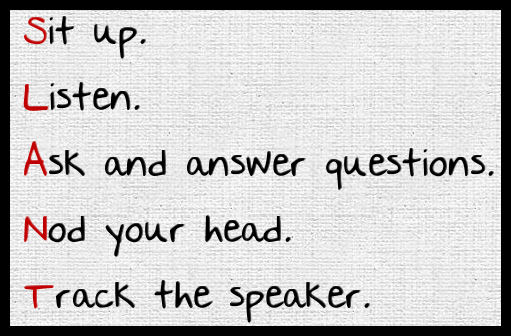
For example, when I have a student that isn’t on task, I sometimes say,  “If you don’t get on task, I am going to have to start requiring you to stay after school to make up time.” Lemov points out that, by stating it this way, I am assuming that the student will not stay on task. The solution is to say “Show me your best SLANT” and walk away “as if you couldn’t imagine a world in which (the student) wouldn’t do it” (p. 206). Of course, you may have to go back a couple of times to make sure that the student knows exactly what is expected, but it tells the student EXACTLY what you want him or her to do.

Imagine what it would be like if you started this at the beginning of the year? Off-task behavior would still be there, of course, but I bet it would be much easier to get the whole class back on track if you reacted positively by stating high expectations and standards. The entire book is like that. I kept on having “aha” moments as I worked through it. If are looking for a book that will improve your classroom management almost instantaneously, this is definitely a book to check out!

__________________________________________
Have you read a book this summer that really made you think? Leave me a comment because I’d love to check it out!

Philly "Phirsts"

Okay… I know that was a bad joke, but it made me giggle.

My district sent me to the ISTE (International Society for Technology in Education) Conference in Philadelphia. I was one of the lucky ones that got chosen. I was very excited to go. What I didn’t realize at the time that I was chosen is the fact that this trip would change my perceptions of so many things.

First off, Philadelphia is an awe-inspiring city. I didn’t realize how much history and diversity is packed in the small area where we were. We stayed at the DoubleTree on Broad Street. It is a gorgeous facility with a lobby that is great for people watching and hanging out. The best thing about it is that it was within walking distance of so much. I took advantage of it as much as I could.

Here are some of my firsts in Philadelphia:

I had my first Philly Cheesesteak at Spatoro’s in Reading Terminal Market. Let me tell you, the experience was definitely an interesting one. I waited in line for 45 minutes for the steaky-cheesy-oniony-peppery deliciousnes. Believe me, it was worth the wait. I now have a baseline for what a good Cheesesteak tastes like.

The buildings had murals on them!

I had my first ride in a taxi. It may sound corny, but it was something that I’ve always wanted to do. Luckily, I was with a very city-savvy young lady who made sure I didn’t die (thanks, Tracy).

I walked around a big city by myself. Previously, I wouldn’t be caught dead by myself in a place the size of Philadelphia. Here is the back story: My travel companions didn’t want to go to a gift shop that I wanted to enter. Instead of just passing it by, I told them that they could go ahead without me. It was a phenomenal feeling not having the pure anxiety that I used to have when walking alone. By the end of the trip, I was completely comfortable with being on my own.

Broad Street

I talked to people I didn’t know at all. In fact, I made first contact. Usually I sit back, observing everyone, thinking things in my head that I want to say aloud, and keeping silent. I pushed myself out there and struck up conversations with complete strangers. I decided that this ISTE conference would be one where I focused on my networking skills. It was very enriching. I think I get why people do it now. I am still not 100% comfortable with it, but I’m closer.

I took my alone time when I needed it. I am not good at taking myself out of a situation or a group because I don’t want people to think that I am not social. I’ve come to realize that I need my solitude in order to process. If I don’t get this, I go into a sort of a panic mode. By giving myself permission to go be by myself without feeling guilty, I was able to avoid some of the troubles that I usually have when dealing with large groups. It also helped that the great group of people I am with didn’t take it personally when I didn’t hang out with them.

Overall, the ISTE conference really enriched my life, both personally and professionally. I am so very thankful for the opportunity. I think I am going to have to figure out how I can attend next year’s conference in San Diego!


7 Ways to Increase Comprehension in Struggling Readers

If you have never had an opportunity to go to one of Dr. Archer’s conferences and you are even remotely interested in literacy, you need to figure out a way to go to one. Beg your administrators, save up your change, have multiple yard sales, ANYTHING to help you make it. Dr. Archer is charismatic, entertaining, and generous. To top it all off, the strategies that she presents are research-based as well as practical. She focuses so much on active participation that it is easy to see why her methods are so effective.

My top 7 Take-Aways from the Conference

1. Don’t commit assum-icide. Sometimes we, as teachers, forget that our students don’t come pre-packaged with the information that want them to know. Because we assume, we generate gaps in our students’ knowledge. These gaps interfere with comprehension to a great extent. It seems logical, but I know that I have been guilty of assum-icide.

2. One of the best things you can do for struggling students is to *teach* them. I know this seems like a no-brainer, but, if you really think about it, how much time to do we actually get to do this? It is the explicit instruction that really helps the struggling readers. Discovery learning definitely has its place, but if the students have no knowledge base, there is little chance that they are going to discover on their own.

3. Teaching reading should not just happen in the Language Arts and English classes. Every subject area has an incredible opportunity to teach reading strategies to help their students become fluent readers. Content area teachers need to get out there and share information with their students while teaching them HOW to read it. 

4. Without automaticity, comprehension is inhibited. With fluency comes comprehension. If a student’s cognitive energy is being put into decoding, there is no energy left for comprehension. It is essential to give students the skills they need in order to be fluent readers. 

5. Practice, practice, practice. I know that I am very good at initial instruction. I can get my kids rip-roaring ready to go. The units that we work on are (usually) successful, and the students demonstrate mastery at the end. Dr. Archer asked us what would happen if we tested our students two units down the road. Would they demonstrate the same amount of mastery?I realized that my students might not. Practice is key. Working in cumulative review into my lessons will help prevent my students from losing what they’ve  learned.

6. Teach vocabulary explicitly. Pick the words that you want your students to really own. They need to be unknown words, abstract in nature, and applicable. Boutique words (words that students will never see in their real lives) aren’t ones that should be focused on. This made me think of the short story “The Gift of the Magi,” by O. Henry. One of the vocabulary words that the teacher edition suggested for explicit instruction was mendency squad. Would that be a vocabulary word that is worth spending the time teaching? I am going to start asking myself that question more often, now.

7. Get an English Language Learner dictionary. These dictionaries give student friendly definitions. When you teach vocabulary, you need to provide your students with definitions that they can understand. Anyone who has checked out a dictionary lately probably has noticed that the definitions aren’t readily accessible to your average adolescent reader. The definitions in these dictionaries take the work out of creating denotations that are understandable.


Final Thoughts
There was so much more that I learned from the conference. The three days were not in vain. I just know that I am excited to see how the new practices and procedures increase the success of my struggling readers. For those of you who have heard Dr. Archer, I have one final thought. Woo-woo. 🙂

8 Big Ideas

I was recently turned on to this post by Scott McLeod (thanks to Twitter). Mr. McLeod writes about the GenYes Blog’s post about the 8 Big Ideas of the Constructionist Learning Lab. As I was perusing the “8 Big Ideas”, I started thinking about what goes on in my classroom. The ideas outlined seem like no-brainers, but I had to ask myself if I followed the concepts presented. After all, part of being a life-long learning is reflection, correct? The process was very eye-opening to me.

I realized that I still need to work hard on learning by doing. Trying to figure out how to make reading and writing a hands on activity is something that I struggle with. One of the ways that I am going to try to address this is by having my students be more hand on with their learning. I am going to go over the standard with them (thank you, Common Core Standards, for allowing me to do this without my brain exploding) and then ask THEM what they need to know in order to master the standard. I know that it will make planning more extensive, but the benefits will greatly outweigh the costs.

This segues perfectly into the next idea that struck me as pertinent: learning to learn. By giving my students more control over their learning, I will be giving them skills that will help them for the rest of their lives. Maybe it will encourage them to take the next step and the next and eventually not be so reliant upon other people to give them information. I also know that it is going to be a long process to get my students where they need to be. Many of them will be frustrated and challenged more than they’ve been challenged before. However, once they get started, they will enjoy it.

Hard fun is the third concept that stood out to me. Once they get used to the difficulty of guiding their own learning, they will start to see the fun in it. When I think of the classrooms of teachers that I admire, I see the students working hard, but having fun. The teachers in those classrooms take a challenging, abstract idea and make it the students’ responsibility to make it concrete. They guide the students, of course, and give them the help that they need when they get stuck; they also allow the students to fail over and over again in search of the solution. The thing is, the students love it. I like to think that I give my students some opportunities like this. I also know that I could do so much better at providing these sorts of things for my students.

Big idea #5, taking time, is one that worries me the most. I know that I can give my students unplanned time in the classroom. In fact, I do it often. When I say unplanned, I don’t mean letting the students do whatever they want. I mean that they have a task to complete in a certain amount of time, but how they get there is up to them. Unfortunately, my ability to give my kiddos time to learn how to manage it is limited by the requirements of the district. In this time of benchmarking, testing, assessing the assessments, and high stakes testing, the timeline of my classroom is determined by my administrators. Instead of being allowed to go more in-depth with what my students are learning, I have to fit 20 performance objectives into four-week intervals. I have to figure out a way to help my students get to where they need to be while still passing the “formative” pencil-and-paper tests required by the district. Maybe giving them the skills to learn on their own will help.

This is only the beginning of my musings on this topic. I know that I will have many more epiphanies as my brain chews on these concepts.